
Red shift: New ZR reveals Nikon's cinematic ambitions

Nikon ZR: Nikon’s mirrorless camera built for digital cinema
The Nikon ZR marks a new approach to video within the Nikon Z system: a full-frame mirrorless camera designed specifically for filmmakers and advanced content creators, featuring 6K RAW recording, the new R3D (NE) codec derived from RED technology, and internal 32-bit float audio—a first for the category.
Key specifications
- 24.5MP partially stacked full-frame CMOS sensor
- Nikon Z mount
- IBIS stabilization up to 7.5 stops
- Video recording up to 6K 60p
- RAW codecs: R3D (NE), N-RAW, and ProRes RAW
- 4" rear display – 3.07M dots, 1000 nits
- CFexpress Type B + microSD
- AF with subject detection for people, animals, vehicles, and aircraft
- Internal 32-bit float audio recording
- No mechanical shutter
What’s new in the Nikon ZR
A familiar sensor, a completely redesigned body

At its core, the Nikon ZR uses the same “partially stacked” sensor introduced with the Z6III, but the body has been completely redesigned for a video-first workflow. The lack of an electronic viewfinder and the compact, boxy form factor make the ZR ideal for gimbals, rigs, and lightweight cinema setups.
The large 4-inch rear display in a 16:10 aspect ratio is clearly geared toward video: high brightness (1000 nits), support for the P3 color space, and a 1280×800 resolution deliver a more faithful preview of the final image.

The combined Nikon and RED logos are hard to miss, highlighting the direct collaboration between the two companies following Nikon’s acquisition of RED.
New R3D (NE) codec

The Nikon ZR introduces the new R3D (NE) codec, inspired by REDCODE RAW. While it’s not identical to the format used by RED cinema cameras, it shares the same log curve and color gamut, making it easier to integrate ZR footage into professional cinema workflows.
This also means you can reuse existing RED LUTs, simplifying mixed edits that combine ZR footage with cinema cameras. The ZR can record 6K and DCI 4K up to 60p, and UHD 4K up to 120p in RAW.
At the moment, R3D (NE) footage requires an initial step through RED Cine-X Pro for exposure and color management, but Nikon has already confirmed its intention to bring native support to the major editing platforms.
Cine EI and advanced exposure management
In R3D RAW mode, the Nikon ZR adopts a workflow similar to Cine EI: gain is locked to base values (ISO 800 or ISO 6400), while ISO changes are stored as metadata.
This enables much more refined control over highlights and shadows in post-production, bringing the ZR’s behavior closer to that of professional cinema cameras. The N-RAW codec, on the other hand, works in a way that’s more familiar to traditional stills cameras.
Internal 32-bit float audio

One of the most innovative features of the Nikon ZR is internal 32-bit float audio recording. This technology captures an extremely wide dynamic range, dramatically reducing the risk of clipping and the need to ride gain while shooting.
Unlike solutions that require external XLR adapters, the ZR supports 32-bit float directly in-camera, both with its internal microphone (based on Nokia’s directional OZO technology) and via the 3.5mm mic input.
Body, ports, and power

The Nikon ZR’s body immediately recalls compact Sony FX cameras, but without active cooling. Its fiber-reinforced plastic construction strikes a good balance between durability and low weight, making it well suited for gimbal use.
Connectivity includes USB-C 3.2, a microphone input and headphone output, while video out is handled via micro HDMI. The memory setup is more unusual: CFexpress Type B paired with a microSD UHS-I slot, mainly intended for LUTs and settings.

Power comes from the EN-EL15c, the same battery used by the Z6III: solid battery life, but not designed for long, continuous takes without external power.
Video performance and real-world use

As you’d expect, Nikon is placing heavy emphasis on the ZR’s RAW capabilities, but for many users a solid 10-bit Log mode may be the most effective compromise: lighter files than RAW, while still offering wide flexibility for grading and editing.
Quick comparison with key alternatives
To better understand where the Nikon ZR fits, here’s a concise comparison with a few cameras that are closest in philosophy and video use.
| Model | Nikon ZR | Sony FX3 | Nikon Z6 III |
|---|---|---|---|
| Sensor | FF 24.5MP partially stacked | FF 12MP BSI | FF 24.5MP partially stacked |
| Max video | 6K 60p | 4K 120p | 6K 60p |
| RAW video | R3D (NE), N-RAW, ProRes RAW | External RAW | N-RAW, ProRes RAW |
| Audio | Internal 32-bit float | 24-bit | 24-bit |
| EVF | None | None | Yes |
| Target | Filmmakers, indie cinema | Professional video production | Hybrid photo/video |
Press release
Nikon introduces ZR, a new full-frame camera designed for cinema
Nikon announces the new Nikon ZR, a full-frame mirrorless camera designed to deliver advanced video tools in a compact, accessible body. Built for filmmakers, content creators, and independent productions, the ZR expands the Nikon Z system with a model clearly aimed at digital cinema.
The Nikon ZR features a 24.5-megapixel partially stacked full-frame CMOS sensor paired with processing optimized for high-resolution video. The camera can record up to 6K 60p and supports multiple RAW formats, including the new R3D (NE), developed in collaboration with RED.
One of the ZR’s standout features is internal 32-bit float audio recording, enabling extremely flexible audio management without the need for critical gain adjustments while shooting. This feature—rare in mirrorless cameras—brings the ZR even closer to the world of professional cinema cameras.
From an operational standpoint, the Nikon ZR adopts a viewfinder-less design with a bright 4-inch rear display and a compact body ideal for gimbals, rigs, and modular setups. Support for cinema-style workflows such as Cine EI further reinforces the model’s professional focus.
Availability
Nikon ZR will be available sometime in 2025. Pricing and availability may vary by market. Specifications and features are subject to change without notice.
First impressions

The Nikon ZR isn’t a traditional cinema camera, but it’s not just another mirrorless camera either. It aims to bring key digital-cinema tools—advanced RAW, Cine EI, and 32-bit float audio—into a price range and form factor that are far more accessible.
The absence of active cooling could limit its use in more demanding productions, but the balance of price, sensor, and features makes the ZR extremely compelling for emerging filmmakers, film schools, and independent productions.

In that sense, the Nikon ZR could play a role similar to what the Canon EOS 5D Mark II once did: making advanced cinema tools accessible to a much broader audience.
Ti consigliamo
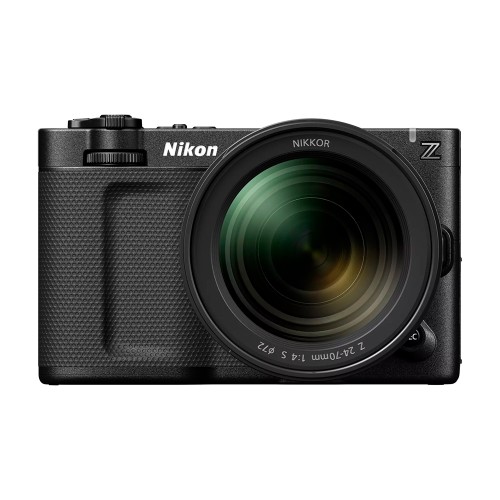
NIKON ZR Cinema + Z 24-70mm f/4 S
€2,999.00
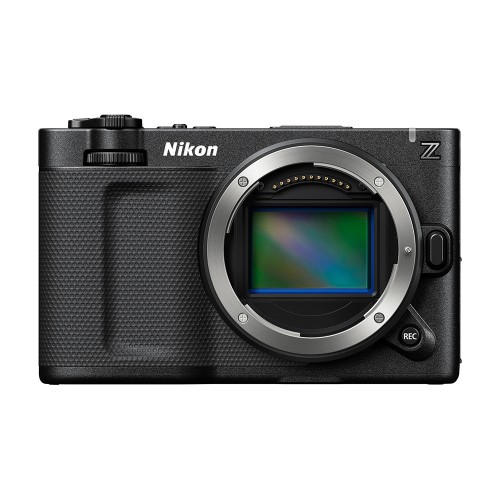
NIKON ZR Cinema BODY
€2,549.00